
Ancient Italy Journeys

Southern Puglia
This journey explores the southern part of Puglia (Apulia), particularly the Salento peninsula, where coastal plains, limestone plateaus, and Adriatic and Ionian shorelines preserve the layered presence of Messapian culture, Greek foundations, Roman reorganization, and later developments.

Fortifications of Ostuni
In Lecce (Lupiae), classical foundations coexist with later architectural layers. Along the Adriatic coast, Otranto (Hydruntum) illustrates the strategic position of the region between Italy and the eastern Mediterranean.

Roman Theater in Lecce

Otranto, Byzantine Frescoes
At Alberobello, trulli structures express vernacular building traditions rooted in the limestone environment. The collections of the National Archaeological Museum of Taranto (MARTA) in Taranto (Taras) provide essential context for understanding Magna Graecia and its maritime networks.

Alberobello
Accommodations will be based in or near the port city of Brindisi (Brundisium), whose long maritime history connected Southern Italy to Greece and the eastern Mediterranean and whose harbor setting reflects this continuity.
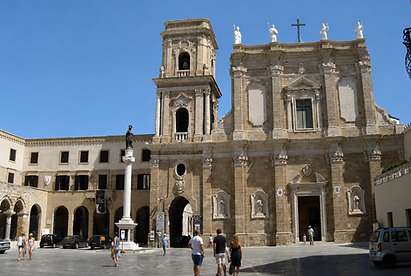
Brindisi Cathedral
Start Date: Spring 2027